the Fam Reunion
Adapted and added to from the original.

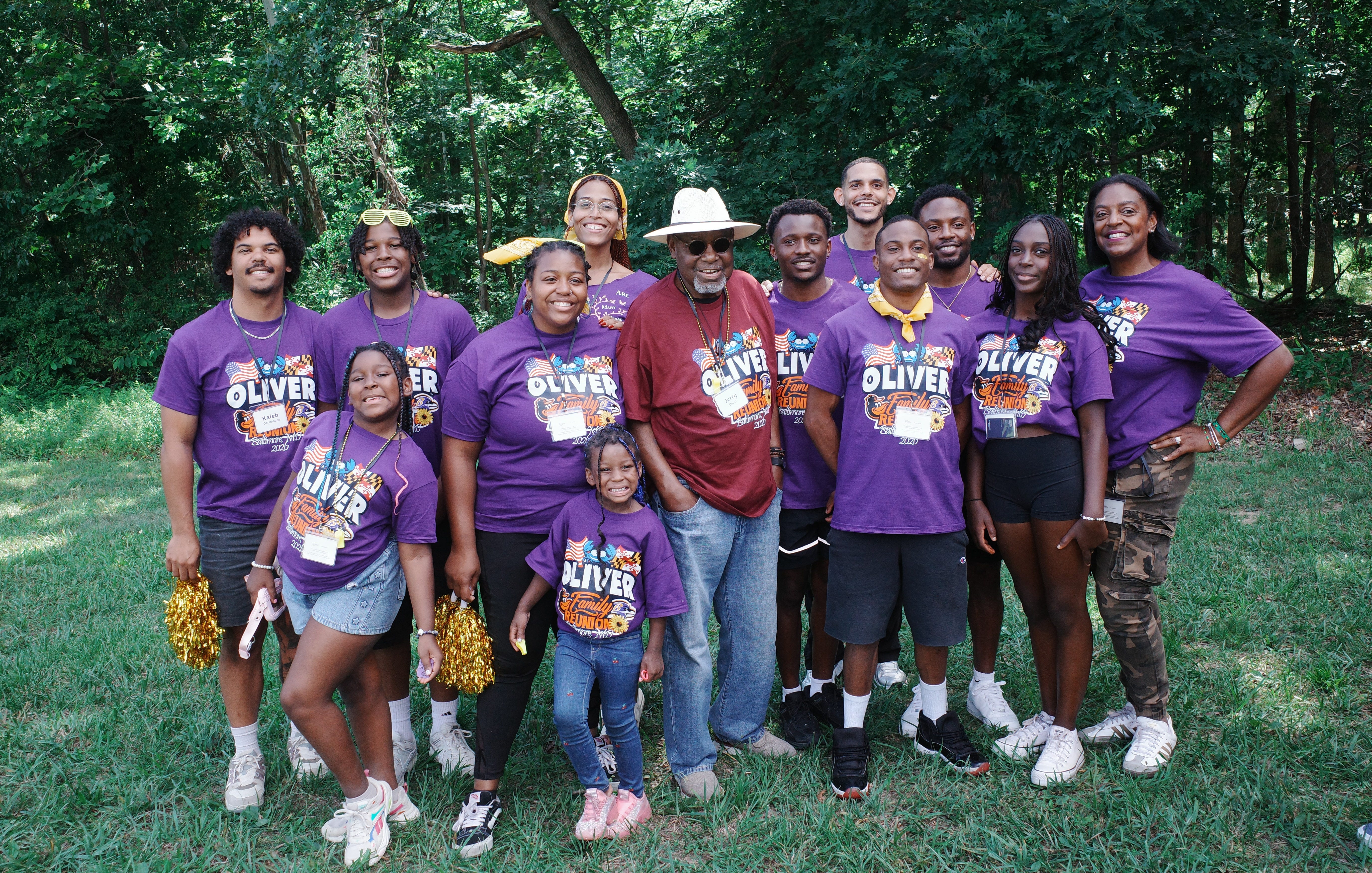
Initially, this was planned to be spoken in front of of my family for the recent reunion we had. As most of us well know, time is but a suggestion for those speaking, and folks are storytellers and time is a construct. Needless to say I did not get my lil 7 mins of quick story-lecture, but I did end up being volunasked to help plan our next reunion in two years. It’s interesting to think that it’s both timing for the family to pass the baton from the elders to the younger folks, while also recognizing that the reunion itself has been consistently ongoing for 70ish years. During this reunion, I also realized how, as America celebrates 250, my great cousin uncle’s (who was taking up necessary time during the living legacy speeches) grandparents were born into enslavement. For those counting, that’s not that long ago.
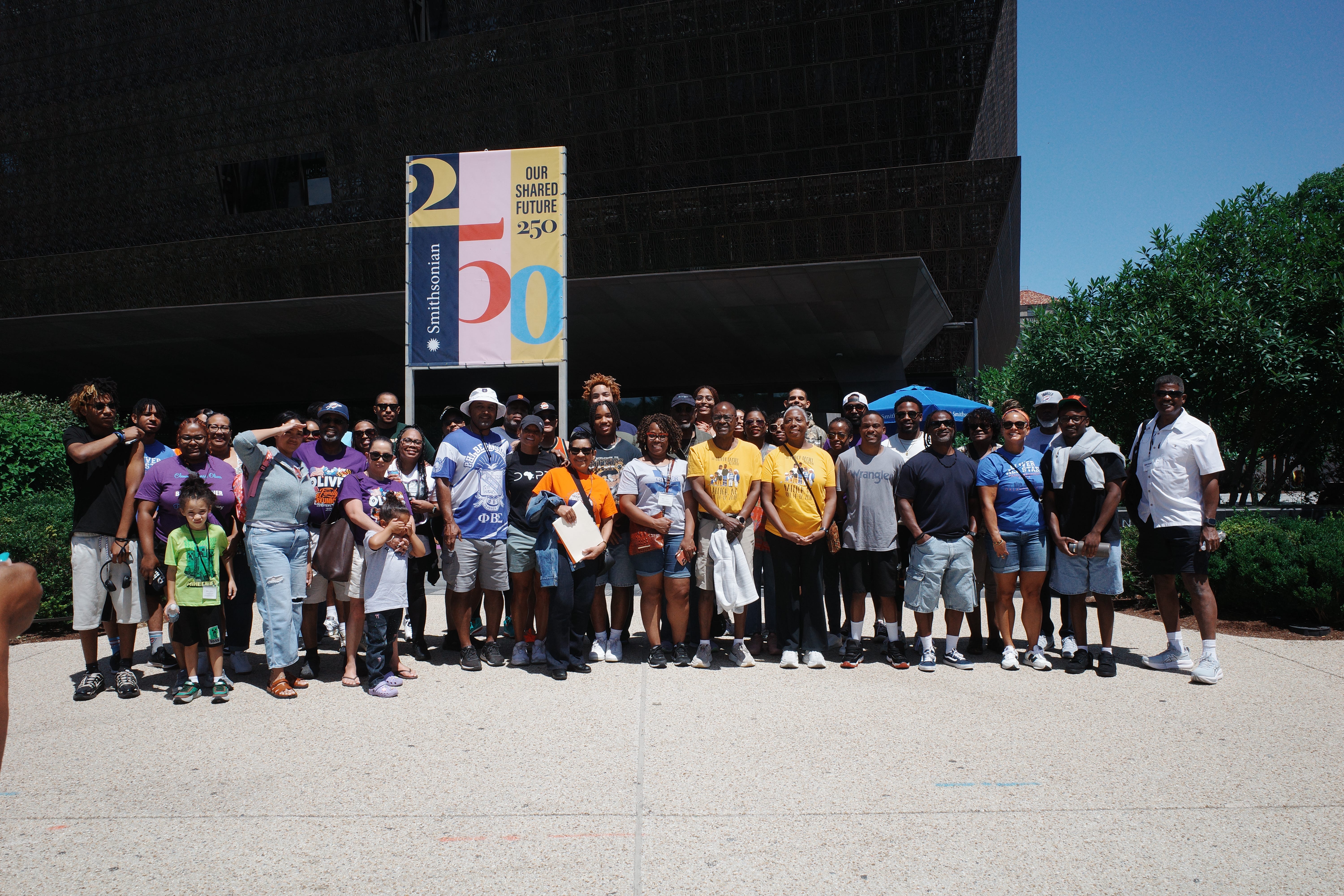
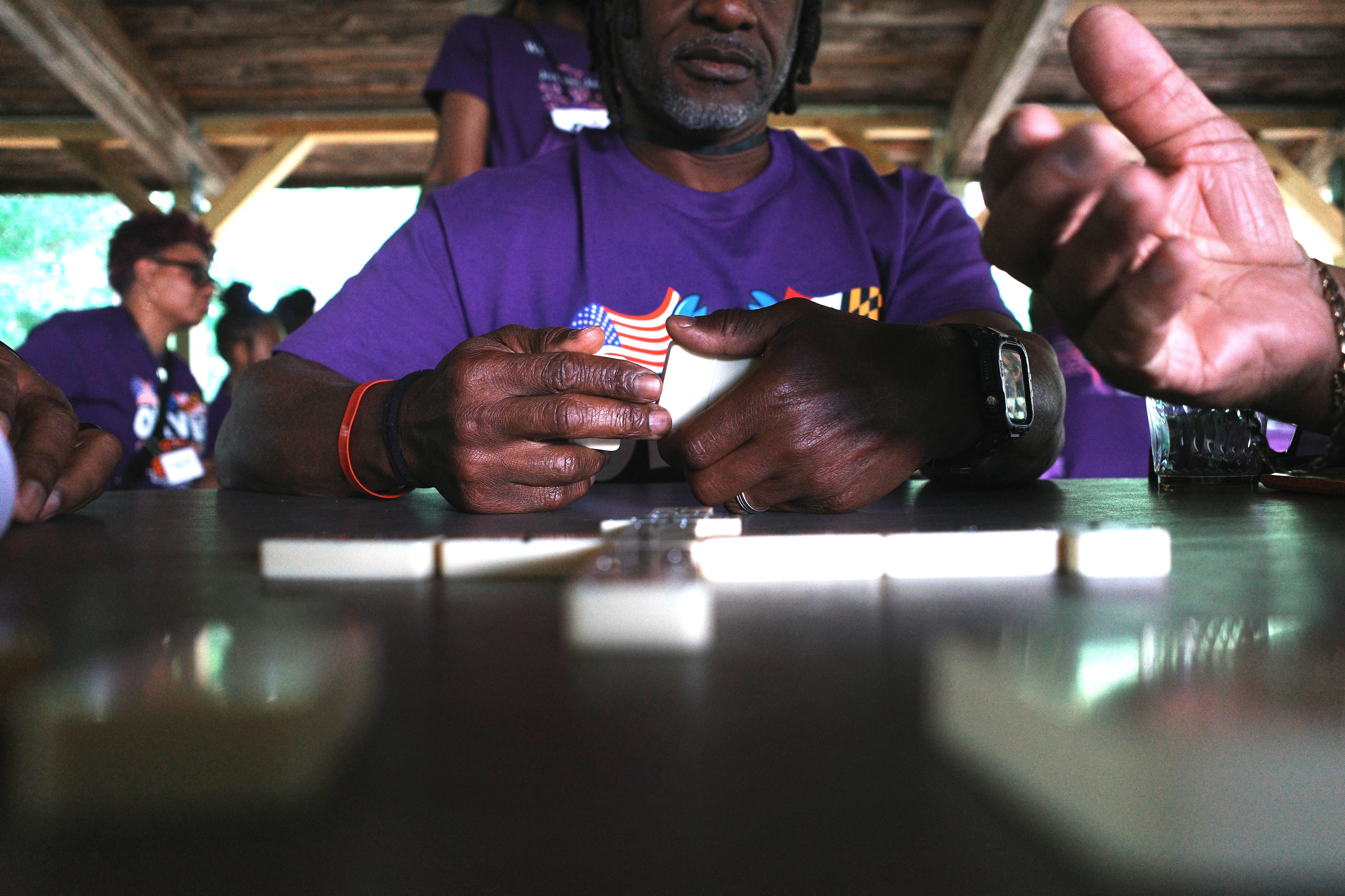
Over the quick weekend in Baltimore, we ventured on various excursions to the African American History Museum, took harbor cruises and communed over family picnic games, including of course, spades and dominoes. Prior to getting whimsically ran off the dominoes table by my cousin uncle Ray, I was made keenly aware of how we (Black folks from Arizona) play spades, quickly recognizing the regional differences from how others in the family play as well as friends from different places. It was also a weekend of realizing how close our family, and our Black American diaspora (including the americas broadly) are at such a critical moment of needing to unforget. In my head, it’s quite obvious to someone watching the World Cup this year how vast, long and egregious the enslavement of Africans was a global venture, from Saudi Arabia’s (Arab slave trade) squad being largely darker skinned, to Black Ecuadorians (colonized by Spain), to Cabo Verde (colonized by Portugal) and Ayiti (colonized by France), to the US and the Netherlands, noting the ways colonial and imperialist powers have excavated our people and shipped us all over; yet benefit.
As myself and my cousins prepare for our next family reunion, I’m reminded of the importance of remembering where we’ve been, how my grandparents grew up during segregation and their families migrated out of precarious situations, but also how we made home amongst various places. Our celebration of Juneteenth isn’t one of glamorizing enslavement or the oppression of our people, but rather the ways we invoke everyday freedoms and knowledge, all the while still living in a deeply carceral and anti-Black settler colony that engages in imperialism across the world, while neglecting its people at home. Below is my speech I had written for the family, and now you all get to a little glimpse. Full disclosure, this is not an invitation to the cookout.
Dear Family:
For those who I don’t know yet, my name is Dr. Kaleb Germinaro and I’m a grandson of Jerry Oliver Sr., son of Jerry Oliver Jr. and my most cherished role, brother to Jerry Oliver III. I grew up in Phoenix, bounced around a bit across the coasts for school and football, and now I’m a professor of Black studies, geography & education in Chicago. My scholarship revolves around some of what we were able to experience today at the African American History Museum, Black history, presentation of that history amidst the ongoing erasure of our community, our places and our stories. As my family operates, we make moves in threes, three Jerry’s, three K names, three J names and 3 B names, and my talk will try to be in line with that today.
Sadiya Hartman, an African American Literature professor and historian, said “Every generation confronts the task of choosing its past. Inheritances are chosen as much as they are passed on. The past depends less on 'what happened then' than on the desires and discontents of the present. Strivings and failures shape the stories we tell. What we recall has as much to do with the terrible things we hope to avoid as with the good life for which we yearn. But when does one decide to stop looking to the past and instead conceive of a new order? When is it time to dream of another country or to embrace other strangers as allies or to make an opening, an overture, where there is none? When is it clear that the old life is over, a new one has begun, and there is no looking back? From the holding cell was it possible to see beyond the end of the world and to imagine living and breathing again?”.
Hartman is referencing the need for persevering, engaging and reinvigorating our history as it’s essential to our survival but it’s also embedded within us, the memories from the places we’ve been, objects we’ve brought with us and the relationships we’ve made along the way. One of my more recent projects was in Seattle, working with Black youth in a summer camp focused on Black studies. We were working with a museum to excavate the Black history within the central district of Seattle, a historically Black neighborhood facing rapid gentrification and folks being pushed out, including these students families. We asked them, “what histories might be missing from the archives at the library about the black community? Where might we find it?”
We visited the archive at the local public library and one of the students, Unique, noticed an organization her grandma ran during segregation wasn’t in the archive. It was the Central Area Education Council, the advocating body made up of Black parents organizing for better resourced for their children’s classrooms and teachers. I tell this story to highlight how we are collection of stories of the places we’ve been, our elders are that and carry these memories that are our reality. Unique’s grandma started that group and now theirs more information on the record, lest us forget.
I’ve taken on a project of writing and researching about Blackness in Arizona, learning about the ways Black folks, and our family, made their way west, the often forgotten western migration, and I opted to start with talking with my grandpa. Mind you, grandpa is a hard man to get a sit down with between his Bruno Mars concerts, escapades with peppy and traveling the world. With that said, I approach this work by focusing on the ways Black folks tell stories, especially about spaces and places that are important to us. I asked my grandpa this question, where are the black spaces in phoenix and where have they been over time? The way he answered proved my theory on this, the way Black folks, especially yall elders, uncles, aunties snd uncties be talkin, it’s akin to what is called a perigee, or the point in orbit where the moon is closest to earth. So folks be tellin a story and a piece of the point comes at that perigee, then we hit another rotation/orbit.. and boom another piece of the point, and then again and again. And one thing that’s beautiful about this is not only the that this type of story is not linear, but rather it creates spherical rendition; it creates a 3D universe.
So if you’re not listening, the piece of the point isn’t always the main takeaway, you’re being brought on a journey throughout the orbit as well. My grandpa exemplifies this, he explained to me the entirety of the Buckeye corridor in south Phoenix when he was growing up, so vivid I was able to feel the heat on my face as him and his friends sat with to watch cows in nearby pasture, or they raced down their block with hosts of other Black families. Our history is abundance across stories from the MLK’s, the Marsha P. Johnson’s, the Baracks, the Fannie Lou Hamers and the Nina Simones, it’s the everyday, the regular, and the simple joys too, that’s power. Our stories are embedded in each of us, and that, is where so much of our power lies. I’ll leave you with this, elders, make sure we know your stories, please don’t stop teaching them, because we do have a lot to learn from the orbits, even if we miss the pieces of the points at times, and young folks, keep asking questions, keep necessitating the older generations to hear us while we keep asking them for their lore—hearing others stories and making sense of your own.. because those matter just as much. Folks in the middle, be a bridge, make space for us to learn across generations and provide invitations to document these stories as well. I’ll leave you with a quote from something I’ve written recently: “remembering our bodies and the places they’ve been, is an individual and collective endeavor to ensure their place in the future”, thank you.
I hope yall enjoy, cherish these moments, we have an intense venture ahead.
in power,
kg