
Me ft. Multiple Sclerosis Journey
Cheers to 11 years on the MS Anniversary

On this day 11 years ago I had my first relapse of Multiple Sclerosis. This included a small stroke, with have my body going numb. I remember that day being cold, in the 20’s in Philly and it was the beginning of our week that’s in-between classes and finals. My teammates and I just made our way down to our bubble facility to have a throwing session. I had just come off my second season playing at Penn and was rather ready to ge tinto the off season, try and earn playing time and better enjoy my time playing football up to that point. I often think back and question what my life would be like had I not had MS, had I not stopped playing football, and what would have come of that reality. I don’t have these thoughts as a means to wish things ended up differently, but I question how I would’ve found myself given how chaotically cosmic the last 11 years have been. Memory is strange because it’s both raw (similar to love) and a choice (an action), we both choose to remember and at times can’t help ourselves from doing so.
That day was strange, because I remember gradually losing feeling in my face and my arm. I remember my speech waning and my teammates wondering if I was ok. I thought the cold had finally got to me as an Arizona kid and still getting used to it. As we finished the workout I made my way into my locker and started to look up stroke systems. I hadn’t really known of any other medical condition that would cause half your body to go numb and cause you to stop being able to communicate, and come to find out I really fit the bill. I made my way to the trainers office and as I open the door I smacked my face into it. To be honest I didn’t feel it, and at the time I didn’t realize how much your coordination was wrapped up into your perception of space too. While in the trainer, we made the call for an ambulance to come pick me up and I remember seeing the concern on everyone’s faces as I, a 19-year old athlete who’s never been sick or ill, was gradually being debilitated. I don’t recall being scared, maybe that was a defense mechanism intertwined with the football mentality of avoiding feelings and admitting to when you’re scared or hurt, but I really coulda walked to the ER quicker than waiting for the ambulance to come. Which looking back, that’s probably not the healthiest thought but it was my way of hoping that this wasn’t as bad as it looked and felt.
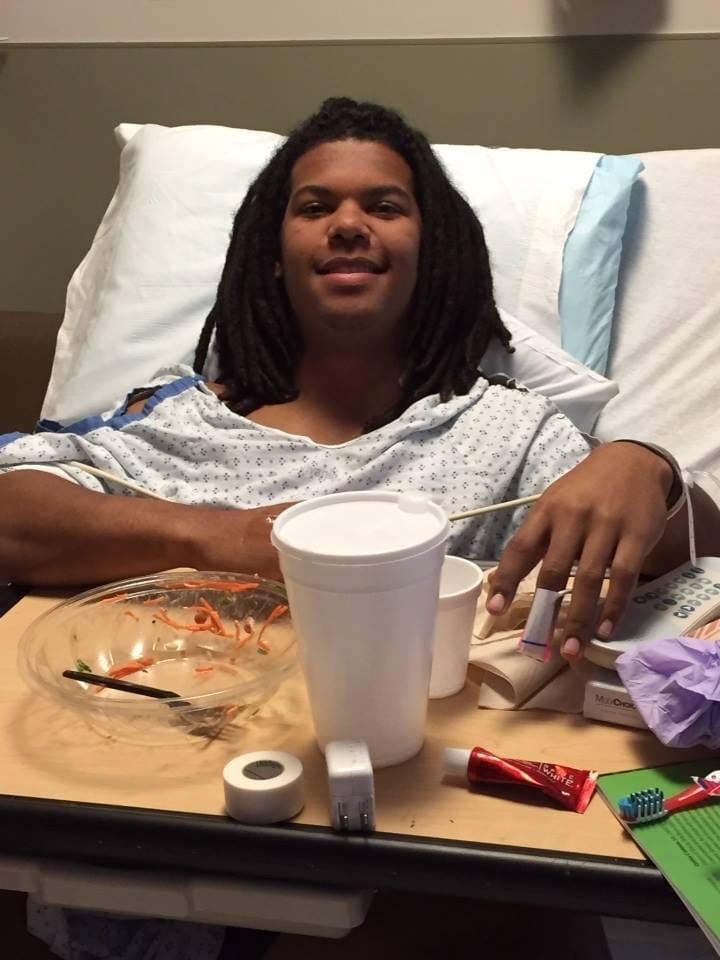
I was subsequently admitted to the hospital, had CT and MRI scans, I was intubated and had multiple cameras in and around my body. I got a spinal tap and took stroke medication. This is all within 24 hours, or one shift. I recently watched the Pitt and abruptly felt a sense of time slowing down, as a lot of these memories flooded my body. I was very much transported back to the time in the hospital where I opted to set aside my own sadness and to embrace the joy of having everyone I loved at the time in the room with me. I wonder what it means to engage in a practice of setting aside sadness to embrace joy, or is it even possible? For example, and I hope those of you reading who I played with and were in the room remember this, Solo (s/o to you and your brilliance) tried to down a 2 liter of coke with almost our whole class in the room. In that moment I didn’t realize how much I needed the distraction, but replaying it in my mind I’m intrigued by the spectacle, a bunch of football players crowded into a small hospital room on the neurology floor, all howling as one of the largest people I know downs a 2 liter of coke. Mind you, in hindsight I also have the show the Pitt playing in my mind, and I know people who are residents and in residencies, and know how teaching hospitals work, and this reinforces how ridiculous of a moment that was. Remembering those moments help with the partial grieving that still exists for me, as it’s a constant and daily reminder that (as it stands right now, hoping research budgets get restored) my disease get’s worse and my body is constantly changing and becoming more debilitated.
It’s funny to thin about how much football allowed me to engage in spectacle, rushing on the edge of impossible, and constantly doing it with others! The following weeks, months and years were me constantly engaging joy and grief, as they chased each other like negative and positive atoms in a storm, yet not a disaster; although it sure as hell felt like it. For example, after getting out of the hospital I went and took my exams. Why, you ask? Because I played football, and it’s hard to shed that mentality in 72 hours. In one of my exams I had one of those old blue books where we wrote directly in them, and mind you my right side was the stroke / MS side and I am right handed. I have pretty good hand writing (winning an award in 7th grade for the best in my pod) and what I was putting on the paper was illegible, akin to my receiver coaches plays on the board during our install and pre practice meetings. I went ahead and finished those finals and did ok for the semester. Although the real challenge was when I got back the following semester.
Spring 2015 proved to be one of the more defining and challenging moments for me in my emerging adulthood and still to this day. Taking a step back though to the hospital room, the day after Solo’s comedic relief, the doctors sat me down with my parents to communicate the news and preliminary diagnoses. The told me that I did in fact have a stroke, they thought I had MS and would need to wait for more tests to come back, and that I couldn’t play football any longer. I remember sitting there, both my parents crying, and me somewhat stone faced and unresponsive. For those who know me well, you know I don’t emote too much anyways, but this moment was really challenging because not only was I trying to process what was just said to me, but I’m also carrying other folks emotions in the room. I look back at that moment and realize that not only was this a metaphor for a lot of situations in my life, but it was also defining in the way that helped me start to recalibrate my own emotional wellbeing by starting to understand why I didn’t respond, at all really.
So, what does a football player do when they are told they can’t play football? We try to play football! Part of my processing technique is doing shit the hard way, being stubborn, hardheaded and neglecting my body. I decided that I worked too hard to just get this far, so I tried my hand playing, while still recovering from my relapse, and prepared to partake in spring ball. I can’t remember much about that time, mainly because my brain was damaged and not functioning well, but the one moment I do remember was the moment I knew I needed to hang it up. I was in a play and pre snap I forgot everything I had ever learned about football, no plays, no techniques, not even the purpose of the game itself. I stood there as the ball was snapped and didn’t do anything and just walked off the field. I essentially blacked out because my body and brain were so overloaded in the moment and that overload acted as an EMP and just shut me down. This similarly happened (around the same time) in my class on game theory, which was actually the most difficult course I took in school, ever. I ended up blacking out during our first exam of the semester (still in spring ball I think) and I sat there for the majority of the exam and only remember writing my name and turning my exam in. I set the low and got a 17%, which helped everyone else out by making the curve favorable. I ended up getting a C in the class with support from the professor but in that moment I realized I had to take this seriously, although it felt like I was doing it on my own in many ways.
Looking back on these moments, I was almost relieved to not feel an obligation to the sport that carried me, molded me and framed my existence. In those months after my relapse and as I worked through who and what I wanted to be, I realized that my whole life up that point relied on proof of work. I want to put this question out there that I’m constantly mulling over, what does the obsession with proof of work mean when you’re disabled and the goal posts don’t exist? Not even shifted, they just disappear? It’s been a reminder that being well educated and successful is not something that would save me in that moment, or ever. In processing my MS journey, it feels like a constant reflection, dwelling on the memories and embracing them, while reconfiguring them to pull together ideas for how to navigate the future. I really have no clue what’s going to happen, or how my MS will continue to manifest. This allowed me to come to more of the realization of how my body is both political and inextricably tied to its production, not just on the football field but in the workplace, society, and relationships as a whole. Not once did a coach pull me aside and inquire into the drastic decline of my performance, as brain scans later revealed I had a relapse around the middle of fall semester of my freshman year that lasted weeks. I had a practice where I dropped 11 passes during essential periods that I was getting reps with the 1’s and 2’s. It reminds me of how many of our bodies didn’t matter, it was just what was next for the system. In reality, the relationships that did manifest were what mattered, the people who show up and wrap around you when we don’t know what else to do. It’s also interesting because sports has, and will always have, an interesting relationship with disability because it’s inevitable. How we understand shapes how we respond and takes care of ourselves differently too, which is where we have a choice to remember and use our memory to shift how we care for each other and ourselves.
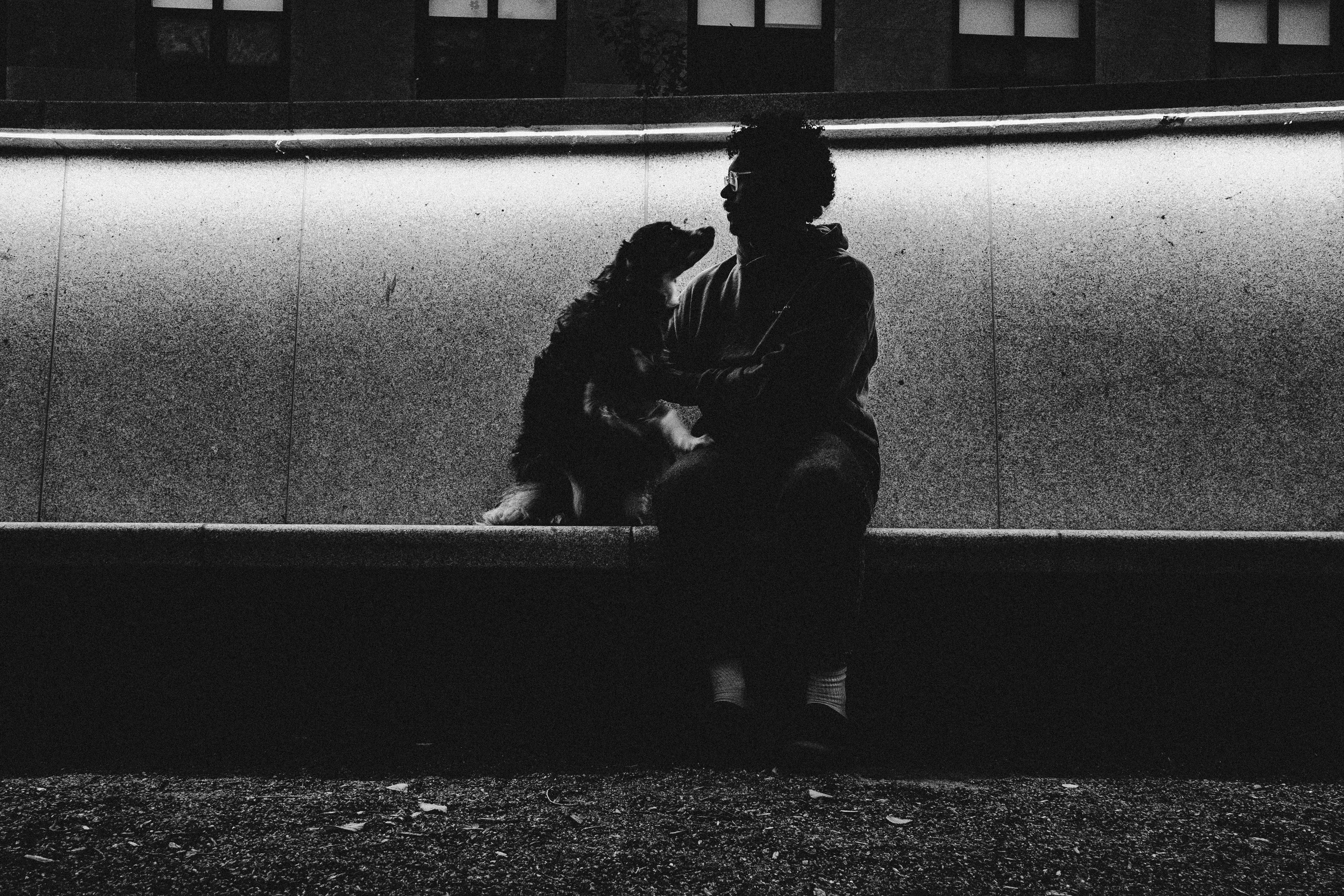
Another year on the journey, to hoping research infrastructure gets restored, this disease is rough. I do enjoy getting to relearn my body in various ways at this point, namely through javelin and competing in para track and field competitions. I should be good to go for the spring season and plan to chronicle some of that journey around then. I also want to share some of the work that I’ve been able to do over the years that I’m proud of, and paradoxically, I wouldn’t be doing it without my diagnosis and it derailing everything for me. Here’s a recent video of a talk I gave at our UIC Spark Talks Series, our version of a ted talk series. Although MS is hard, I am able to live the life I want, I couldn’t dream it then, but I’m doin the thing. Keep s’myelin (MS thing).
Just watched the Pitt too! Enjoyed reading this brotha sending love